

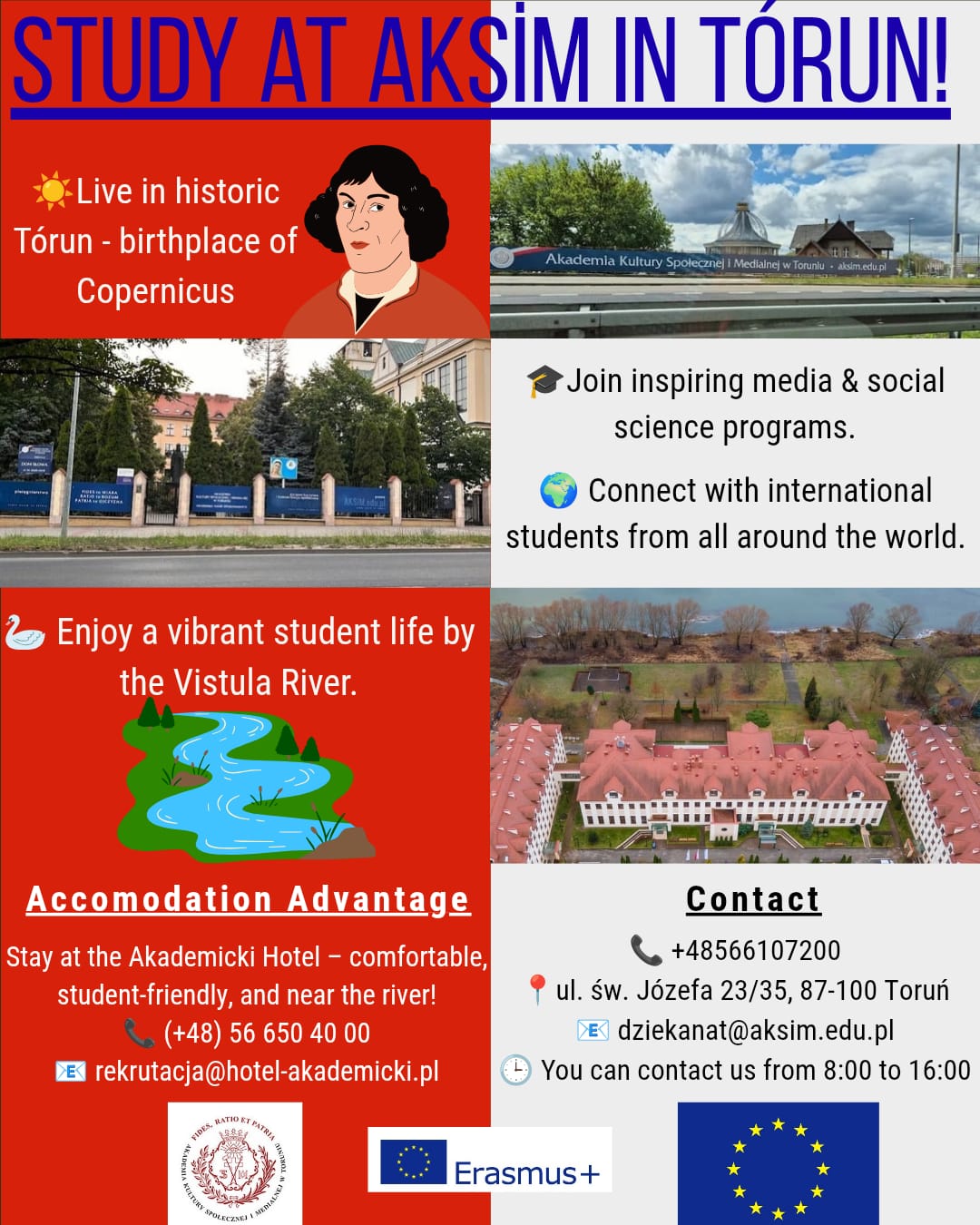
Having been an Erasmus student in Toruń for the past two weeks, I’ve observed the dynamic landscape of Polish society, which includes a growing, albeit often less visible, Turkish community. While Poland and Turkey share a long and interesting history, my focus here is on the modern Turkish immigrants from the Republic of Turkey and their contemporary experiences in Poland, particularly in Toruń.
Turks in Poland Today: Numbers and Where They Live
The Turkish government estimates that around 25,000 people of Turkish ethnicity reside in Poland as of 2023, making them one of the smaller minority groups in the country.
Most Turks in Poland are concentrated in major cities, largely due to work and study opportunities. Significant communities can be found in Warsaw and Łódź, as well as in Gdańsk, Poznań, Kraków, and Wrocław. Additionally, Turkish students are present in university towns such as Lublin and Krosno. Many Turks in Poland are also entrepreneurs or investors.
Regarding Toruń, where I am currently studying, the city’s population was approximately 194,771 in 2023, with an estimated rise to about 199,025 by 2025. However, specific, reliable data on the Turkish minority in Toruń is difficult to ascertain from available information. Some data for Toruń even indicates „Foreigners (%) 0.0” , which is likely inaccurate and may reflect outdated definitions or data collection issues, given the general presence of foreign residents in Polish cities.
Given that Turkish communities typically gravitate towards larger cities for employment and educational prospects, it is probable that while some individual Turks may reside in Toruń, they do not form a substantial, distinct, or officially recorded community here. The absence of specific, reliable data for Toruń suggests that the Turkish presence is either very small, dispersed, or simply not officially documented.
A broader issue in understanding the Turkish community in Poland is the pervasive lack of clear statistical information about their exact numbers. Researchers noted this challenge as early as 1999, attributing it partly to the Turkish migrant group being perceived as „closed” and sometimes distrustful of external inquiries. Polish official institutions do not consistently track Turkish residents, leading to underestimated figures and discrepancies across various public sources. This data gap impedes the development of effective integration policies, proper resource allocation, and a true understanding of the community’s needs. Without solid numbers, the government struggles to tailor support programs, educational resources, or social services, which can hinder the integration process for the Turkish community. This lack of official visibility can also make the community feel unrecognized or marginalized, potentially reinforcing their private nature.
Why Turks Come to Poland and How They Settle In
Migration from Turkey to Poland is a relatively recent phenomenon compared to the larger Turkish communities established in Western European countries through „Gastarbeiter” programs in the 1950s. Nevertheless, this migration has significantly increased over the past decade. The primary drivers for this migration are economic, as individuals seek better job opportunities, higher salaries, and favorable conditions for starting businesses in Poland. Some migrants also cite „freedom of social and political” conditions as a reason for choosing Poland, suggesting perceived improvements over their home country in certain aspects.
A distinctive feature of Turkish migration to Poland is the general lack of governmental support from either Turkey or Poland. Unlike many historical migration waves that received governmental assistance, Turkish immigrants in Poland largely navigate their integration journey independently. These community-based support systems are vital from the outset, assisting with initial settlement, bureaucratic procedures, housing, and even employment advancement. While these networks provide essential aid, they can sometimes confine immigrants to „ethnic niches,” potentially limiting their broader integration into Polish society. The significant role of these community networks underscores how they compensate for the absence of official governmental support for migration and integration, making Turkish migration to Poland notably unique and self-reliant.
Research identifies three primary pathways through which Turkish migrants find employment in Poland, influenced by their social environment:
- Working in Ethnic Niches: This strategy heavily depends on cultural specificities, such as language, and social connections within the Turkish community. Many Turkish business owners in Poland employ other Turkish migrants, including those who have graduated from Polish universities. This path is often chosen by migrants who face difficulties with the Polish language, have limited interaction with Polish society, or possess few connections with Poles or other foreign communities. While these networks can foster career progression, they may also restrict migrants to specific ethnic business sectors, sometimes leading to internal community issues or competition.
- Going International: This pathway is common among some Turkish migrants, particularly students, who view a Polish university education as a stepping stone to careers in Western European countries. They benefit from Poland’s lower tuition fees and living costs compared to countries like Germany or the UK, and Polish diplomas are recognized across the EU. Individuals on this path often have prior international study or work experience, perceiving their move to Poland as part of a larger, global trajectory. Their objective is to develop „cross-national” skills, such as experience in multinational companies and proficiency in English, rather than deep integration into a single country. These migrants frequently prefer working in international companies and can thrive within an „international expat bubble” in multicultural Polish cities, achieving success without necessarily integrating extensively with Polish society.
- Hesitant Integration: This strategy involves migrants actively endeavoring to learn the Polish language and culture. It is more prevalent among those who plan to remain in Poland for an extended period or settle permanently, especially if they have children in the country. The longer migrants reside in Poland, the more crucial integration with Polish society becomes. While international companies may hire professionals without Polish language skills, this job market is relatively small. Most Polish companies, particularly those serving Polish customers, require strong Polish language proficiency. Even with efforts toward integration and employment in Polish companies, migrants may still leverage their cultural background; for example, a naturalized Pole might primarily work with international students at a Polish university, necessitating multicultural skills and English. Despite attempts to adapt, migrants often feel culturally distinct and observe their ethnic difference in Poland’s still relatively homogeneous society. This „hesitant” integration implies that fitting in is not solely dependent on the migrant’s efforts but also on the openness of Polish society to diversity. In a highly homogeneous society like Poland, the constant perception of ethnic differences can create lasting barriers to full assimilation, sometimes pushing individuals back toward their own communities or international expat groups, even if they desire to integrate. Integration frequently occurs within specific groups, such as the middle class in large cities, which tends to be more receptive to diverse cultures.
Cultural Contributions and Community Life
Despite the challenges of legal recognition and integration, the Turkish community and the broader relationship between Turkey and Poland foster significant cultural and educational exchanges. Polish universities demonstrate a strong interest in Turkish culture and language, with Turkology departments at institutions such as the University of Warsaw, Jagiellonian University in Kraków, and Poznan Adam Mickiewicz University. These universities offer programs like Ottoman-Turkish Studies and Turkish Studies, reflecting the academic value placed on Turkish cultural heritage in Poland. Poland has also become a highly popular Erasmus destination for Turkish university students, facilitating direct educational and cultural exchange between young people from both nations.
A crucial organization for cultural cooperation is the Yunus Emre Institute, which opened in Warsaw in 2013. This institute actively promotes Turkish language, history, culture, and art, serving as a key cultural hub for Turks residing in Poland and for Poles interested in Turkish culture. The work of institutions like the Yunus Emre Institute and the presence of Turkology departments represent a form of cultural diplomacy that strengthens the bridge between Turkey and Poland.
Given that the Polish government does not officially recognize the modern Turkish community as a national minority, it does not provide specific state funding for their language or culture within Poland’s domestic minority policies. In this context, the Turkish government, through organizations like the Yunus Emre Institute, fills this void. Their initiatives to promote Turkish culture and language help maintain connections with the Turkish community abroad and reinforce bilateral relations, rather than being a direct integration policy from the Polish side. This suggests that for the Turkish community in Poland, cultural preservation is primarily a self-driven effort or supported by external sources, rather than being an integral part of Poland’s domestic minority policies.
Beyond official institutions, various community groups and online platforms contribute to a vibrant social life for Turks in Poland. While detailed information on formal Turkish cultural associations is limited, platforms like InterNations assist Turkish expatriates in connecting in several Polish cities, including Warsaw, Kraków, Wrocław, Poznań, and Gdańsk. These groups organize social events, offer practical advice on living abroad, and facilitate connections among individuals with similar cultural backgrounds, serving as important informal support systems. Additionally, the Polish-Turkish Chamber of Commerce actively works to enhance economic ties between the two countries, fostering business and investment opportunities.
Conclusion
The contemporary Turkish presence in Poland is largely characterized by a recent wave of immigration driven by economic motivations. Unlike historical Turkish groups, modern Turkish immigrants from the Republic of Turkey generally lack official recognition as a national minority in Poland, primarily due to Poland’s 100-year residency rule for minority status. This legal distinction significantly influences their integration process and access to governmental resources.
Modern Turkish immigrants predominantly rely on robust internal community networks for employment and settlement, particularly given the limited governmental support for migration from either Turkey or Poland. They pursue diverse employment strategies, ranging from working within ethnic businesses to pursuing international careers, often within a global expatriate community. The concept of „hesitant integration” highlights the complex challenges they face in Poland’s relatively homogeneous society and the subtle forms of „facade toleration,” where superficial acceptance may mask deeper prejudices. The persistent lack of clear statistical data further complicates efforts to accurately understand their numbers, needs, and overall well-being.
Despite these challenges, strong cultural and economic ties persist between Poland and Turkey, bolstered by active academic exchanges and cultural organizations like the Yunus Emre Institute. These initiatives, often spearheaded by the Turkish government, are vital for preserving cultural identity within the Turkish community in Poland and for strengthening bilateral relations. They effectively bridge the gap left by the absence of formal minority status for the modern Turkish community in Poland.
For future research, it is imperative to address the data deficiencies by developing more effective methods for collecting detailed information on Turkish immigrants in Poland. Further in-depth studies are needed to understand the lived experiences of Turkish immigrants in various Polish cities, including a closer examination of any emerging communities in places like Toruń. Additionally, research should explore the long-term impact of lacking legal recognition as a minority on their integration, well-being, and community development. Comparative studies with other non-recognized immigrant groups in Poland could also provide valuable insights into the dynamics of integration in an evolving European society.
Elif Topalan